networking-osi.html
* created: 2026-03-28T17:53
* modified: 2026-03-28T19:12
title
Title
description
Description
Good ol' OSI-Model
The Open System Interconnection (OSI) reference model is defined as follows:
- Physical Layer: Bit sequences are transmitted over a medium (e.g. copper cable, fiber-optic cable, air).
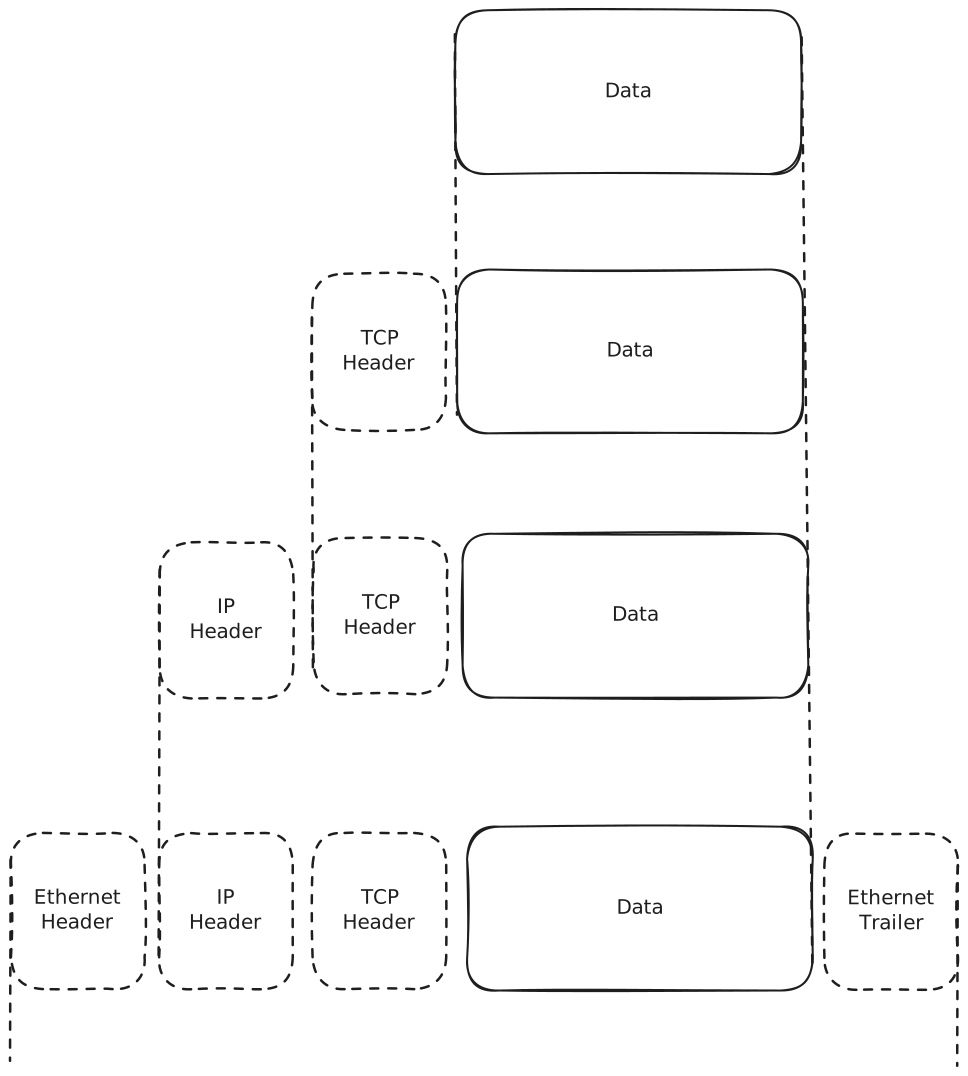
- Data Link Layer: Reliable transmission of bit sequences, which are treated as data packets (frames), prefixed with a Media Access Control (MAC) addresses and suffixed with a bit sequence for error detection. A relevant protocol is Ethernet.
- Network Layer: The transmission path in the network is determined. A IP address is assigned to data packets. Error detection and correction is also performed. The relevant protocol in this layer is the Internet Protocol (IP).
- Transport Layer: The transmission quality and type between sender and receiver are negotiated, and further error handling is carried out. Large messages are segmented into packets. Relevant protocols are TCP and UDP.
- Session Layer: The connection during a session is maintained. Login, password verification, dialog control, and logout processes are handled.
- Presentation Layer: Different data encodings are converted. Data is compressed or decompressed, as well as encrypted and decrypted.
- Application Layer: Application-specific services, such as email, file transfer and use of the World Wide Web are implemented here (HTTP, FTP, SMTP).
Communication
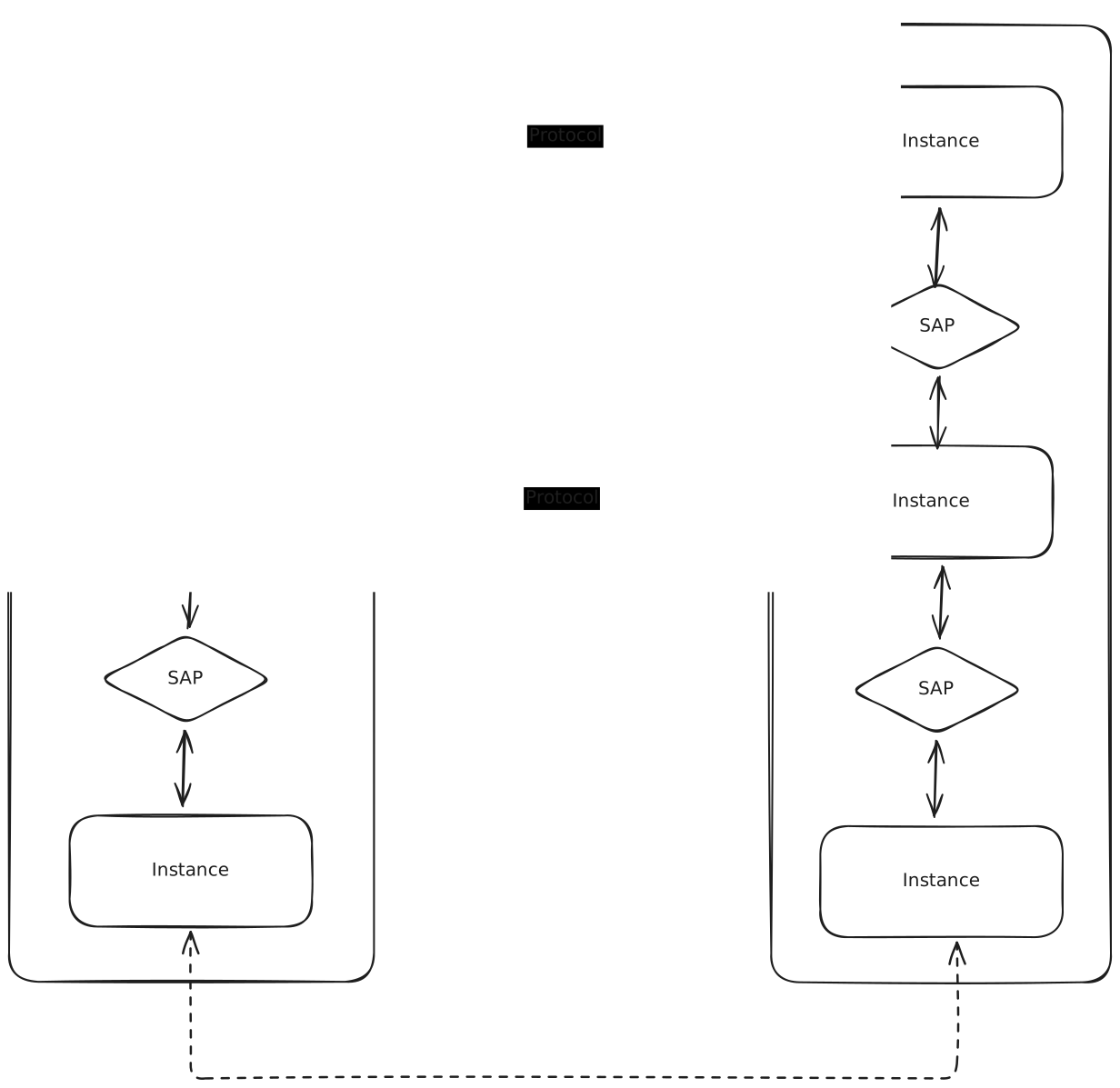
The functions of the respective layers are performed by instances, which are sometimes also called entities.
Transmission of data units through each layer happens vertically. The communication of each instance with it's direct neighbors happens through service access point's (SAP) and is based on service primitives.
Instances also communicate horizontally based on layer specific protocols.
En-/Decapsulation
The process of adding and removing header and trailer information is called en-/decapsulation.
Derivations
Internet Model
Hybrid Model