networking-typology.html
* created: 2026-03-18T22:47
* modified: 2026-03-24T23:37
title
Networking typology
description
A network typology describes the general arrangement of hosts, nodes and edges in a network.
related notes
Typologies
Bus
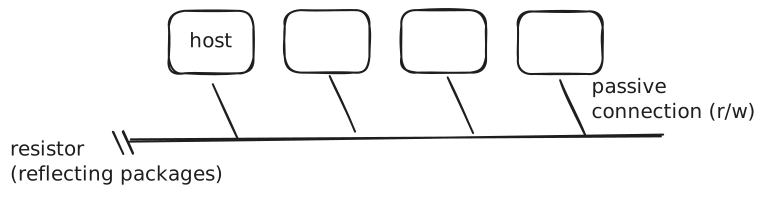
A simple system where hosts are connected to one centralized bus. Each hosts can read and write to the bus, but writing is mutually exclusive.
See Bus
Advantages
- Cost effective
- Simple installation
- Hosts can fail safely
- Broadcasting is simple
Disadvantages
- Limited capacity
- Hard to debug
- Everyone can read
Star
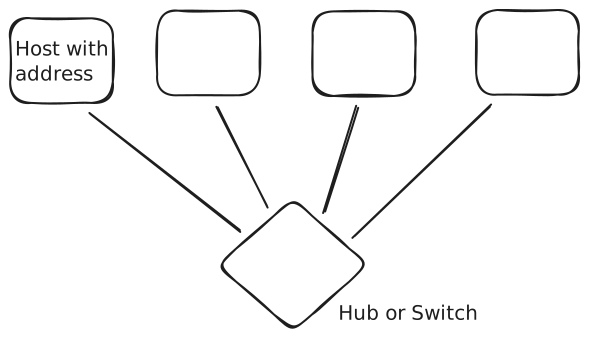
Hosts are connected to one node, which either acts as a hub or switch. A hub always forwards packages to all other hosts, whereas a switch only sends the package to the host determined by their address. Switches allow for parallel communication between multiple hosts and are the most common type of node for the star typology nowadays.
Advantages
- High capacity
- Easy to debug
- Easy expansion
- Broadcasting is simple
Disadvantages
- Single point of failure
- Costs for cables and switches
Tree
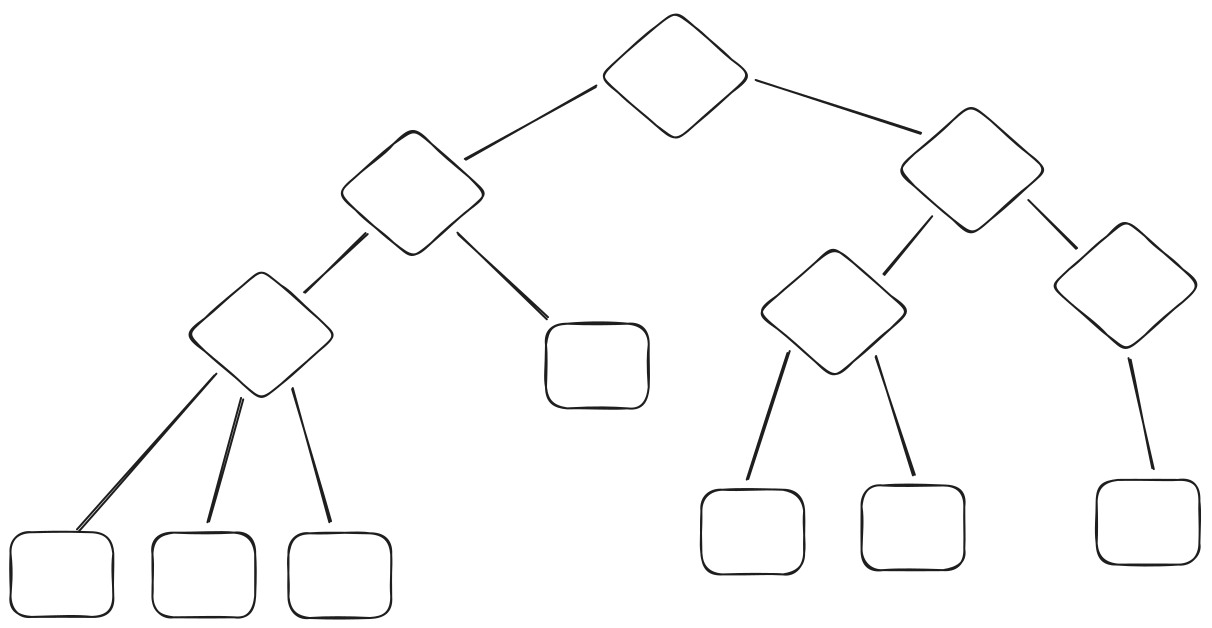
Several star couplers combined together.
Advantages and Disadvantages
Reference the star typology.
Ring
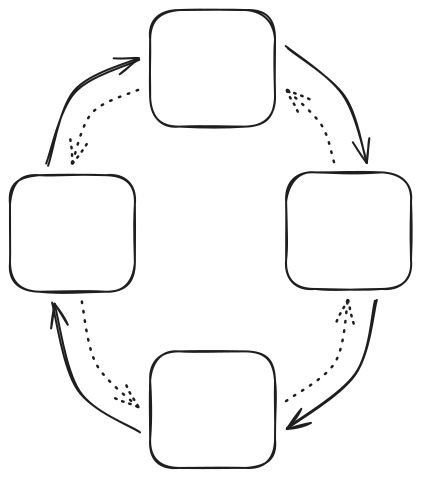
Each host is connected to 2 other hosts. Communication does either happen uni- or bi-directional.
Advantages
- Parallel communication
- Easy extension
- Broadcasting is easy
Disadvantages
- Single point of failure
- Everyone can read
- Hard to debug
Mesh
In a mesh their are redundant connections in between nodes. They get categorized into fully meshed networks, where each node is connected to every other nodes, and partially meshed networks, where each nodes has at least 3 connections.
Advantages
- Fault tolerant
- Parallel communication
- Easy to debug
Disadvantages
- High costs
- Hard to extend
- Broadcasting is difficult
- Potentially everyone can read